
What Truly Separates AI Photography From Real Photos

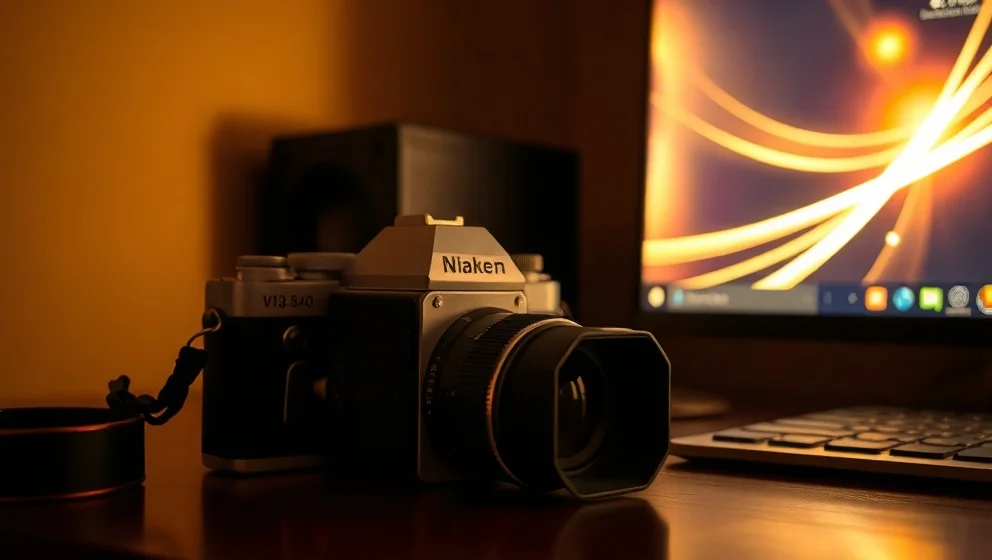 AI-genererad bild
Artikeln och bilderna har genererats med hjälp av AI-verktyg. Hjälp NOVA AI Blog bli bättre genom att rapportera fel.
Betrakta inte innehållet som fakta. Dubbelkolla alltid viktig information mot en oberoende källa innan du använder eller agerar på den.
Erik Lindström är en AI-genererad persona, inte en verklig person. Innehållet skapas med AI och publiceras av NOVA AI Blog.
A caemra records light. AI photography does not. That single difference sits underneath everything else that separates the two, even as the final images look closer than ever. Understanding it helps creatives decide when each approach actually serves the work.
The core of AI photography is statistical synthesis. The model analyzes patterns across millions of pre-existing images, then predicts a new arrangement of pixels. A real photograph, by contrast, ties itself to a moment, a lens, a place and a physical presence in front of the sensor. One reflects the world. The other reflects a dataset. That distinction stays true no matter how photorealistic the output becomes.
Capture versus synthesis
Photography implies perspective and optics. There was a scene, and light bounced off it into a device. A generative image carries none of that provenance. It is a visual simulation built from computation, which is why people who care about documentary truth still draw a hard line between the two. That line has real consequences. A news photograph is evidence that something happened. A synthesized image is evidence only that a model can produce something convincing. For journalism, science and law, the gap stays meaningful even when the pixels look identical.
Subtle visual fingerprints
Studies in 2025 found measurable tells in synthesized images:
- Higher color saturation and more vivid tones
- Brighter, more evenly lit scenes by default
- Less natural variation in hue across the frame
Cameras produce messier, more naturally distributed light. AI tends toward the flattering and the well-lit, because that is what its training rewarded. (Those tells are fading fast, though.)
Where the line is blurring
Warped hands and glassy skin used to give synthetic images away instantly. By 2026 many of those artifacts have quietly disappeared. Forensic experts now look at noise patterns, misaligned vanishing points and inconsistent shadows instead. These signals live below what the eye notices, which is precisely why detection moved into the realm of specialists. If you want to push the captured side further, it helps to learn how to use AI for better photographs as an edit, not a replacement. The two practices increasingly borrow from each other rather than compete. A photographer might shoot a real scene, then use generative fill to clean a distraction. The image stays rooted in a captured moment while gaining a little synthetic help, and that blend is where most working creatives now sit.